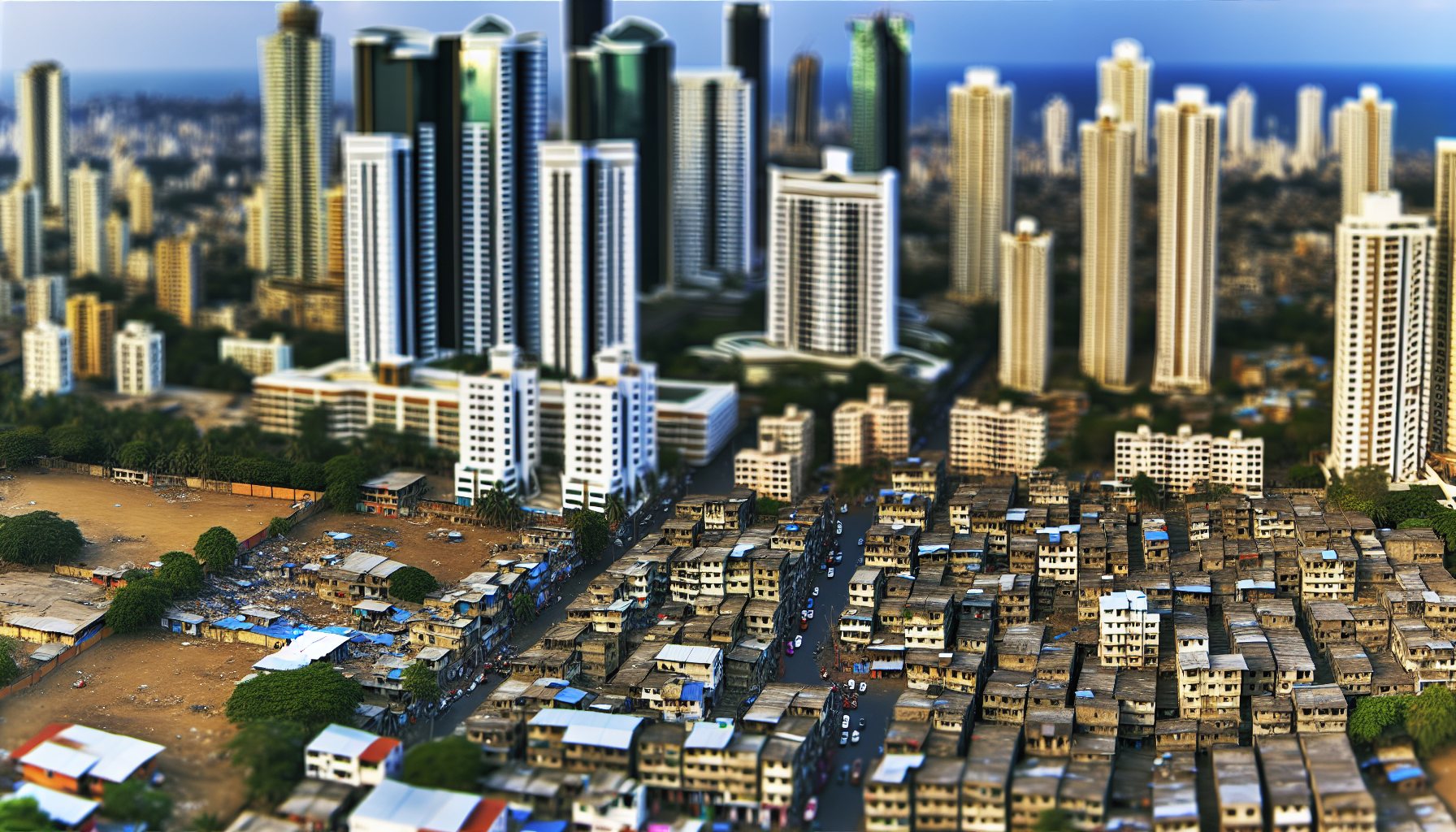
Mumbai’s real estate landscape is a vibrant mix of opportunities and challenges, shaped by its status as India’s financial hub. This article explores the intricate dynamics of the market, revealing insights into housing trends, demographics, and the ongoing issues that impact both developers and residents.
Understanding Mumbai’s Real Estate Market
Mumbai’s real estate market is a multifaceted entity, reflecting the city’s status as a thriving economic and cultural hub. With its soaring skyline, Mumbai offers an eclectic mix of properties, ranging from opulent penthouses to compact studio apartments. The real estate landscape caters to diverse segments from affluent investors seeking luxury residences to middle-class families aiming for affordable housing options. Presently, the city’s residential property market is characterized by numerous factors that contribute to its constantly evolving nature.
The current state of Mumbai’s real estate is marked by high demand driven primarily by urban migration, as people from various parts of India move to this city of dreams in search of better job opportunities and lifestyles. This influx has resulted in tremendous pressure on the housing supply, creating an environment where property values have skyrocketed. According to recent statistics, certain high-demand areas, like South Mumbai, have seen property prices touch astronomical figures, making them some of the costliest in the world.
Demographics play a pivotal role in shaping the market. A mix of young professionals, NRIs (Non-Resident Indians), and multinational corporations influences the demand for real estate. The desire for luxury residences is particularly pronounced among affluent community members with disposable incomes that are fueled by the booming tech and finance sectors. In contrast, the lower-income population continues to strive for affordable housing amidst soaring prices—indicating a significant market segmentation that requires unique approaches.
The luxury housing market thrives in areas like Bandra, Juhu, and Worli, where top-tier apartments and bungalows cater to the elite. These properties often come with world-class amenities and proximity to sought-after schools and workplaces. However, this comes at a price, with starting rates often surpassing several crores of rupees. In juxtaposition, the affordable housing segment remains concentrated in the peripheral regions, such as Mira Road and Virar, where property prices are more accessible, albeit with long commute times for those employed in the city center.
Foreign investments have significantly influenced this competitive landscape. With government policies easing FDI (Foreign Direct Investment) in real estate, international investors have increasingly targeted Mumbai, attracted by the promise of high returns due to escalating property values. This influx not only provides much-needed capital to develop luxurious high-rises but also drives up the prices of existing properties, thereby deepening the disparity between luxury and affordable housing.
Moreover, the introduction of developmental policies such as the *Mumbai Development Plan (MDP)* and the *Real Estate Regulatory Authority (RERA)* has further defined the market structure. While RERA is expected to bolster investor confidence and promote transparency in transactions, the implementation of the MDP is aimed at ensuring sustainable urban growth. These policies, however, must strike a balance between fostering investment and ensuring that the local populace’s needs are not overlooked.
In summary, Mumbai’s real estate market is a vibrant ecosystem marked by contrasting demands and opportunities. Understanding its inherent complexities—spurred by urbanization, demographic shifts, and foreign investment—is vital for stakeholders looking to navigate this bustling financial capital. As the city continues to evolve, it remains imperative to address the ongoing challenges while leveraging the existing opportunities, ensuring a balanced approach toward development and housing accessibility for all strata of society.
Challenges Facing Mumbai’s Housing Sector
Despite its bustling real estate market, Mumbai grapples with several pressing challenges such as inadequate housing, high property prices, and the prevalence of slums. The city’s rapid urbanization has created a significant housing disparity, with a stark contrast between luxury high-rises and the numerous slums that characterize its landscape. The average middle-class family finds it increasingly difficult to access affordable housing options, which, in turn, exacerbates the wealth gap and fosters social unrest.
One of the most glaring issues is the soaring property prices. Over the last decade, Mumbai has seen property prices skyrocket, driven by relentless demand and a shortage of available land. The escalating costs have made it nearly impossible for first-time buyers, especially those belonging to the lower-income demographic, to step onto the property ladder. The average price per square foot in Mumbai now rivals global cities, creating an environment where many are resigned to living in temporary shelters or slums. The implications of such pricing are severe, affecting not just housing but also quality of life, health, and access to essential services.
The urban development policies that govern Mumbai have also played a part in shaping these challenges. While the government has initiated several policies aimed at promoting affordable housing, including the Pradhan Mantri Awas Yojana and various slum redevelopment schemes, these initiatives often lag in implementation. Bureaucratic hurdles, corruption, and insufficient funding have thwarted many of these well-intentioned plans, leaving the lower-income population to fend for themselves. Besides, when redevelopment occurs, it frequently leads to gentrification, which pushes the original residents further out of the city, thereby failing to address their needs effectively.
Moreover, with the economic growth that Mumbai has experienced, there is an undeniable strain on infrastructure. This growth has led to an influx of migrants from various parts of India, seeking better job opportunities. The city’s infrastructure has struggled to keep pace with this surge, resulting in worsening traffic congestion, overburdened public transport systems, and inadequate sanitation facilities. These challenges are particularly felt in slum areas, which often lack basic amenities. The lack of access to reliable public services further exacerbates the housing crisis, leaving many residents trapped in a cycle of poverty.
The implications of these challenges are significant. Housing accessibility impacts not just individual families but the socio-economic fabric of the city as a whole. A stable and secure living situation is foundational for employment, education, and overall well-being. The government initiatives and market responses need to target not merely the housing shortage but also the interconnected infrastructure issues that contribute to the broader housing crisis. Through sustained efforts in policy reform, adequate funding, and community engagement, there remains hope for bridging the gap in Mumbai’s housing sector, ultimately leading to a more equitable city. As the metropolis continues to evolve, addressing these challenges will be critical in shaping a more inclusive future for all its residents.
The Future of Real Estate in Mumbai
As Mumbai continues to evolve, its real estate market is witnessing a significant transformation shaped by various factors. Emerging trends demonstrate a shift in buyer preferences toward sustainability and technological innovation, both of which are poised to redefine the urban landscape. With the impending implementation of smart city initiatives, Mumbai is set to embrace modernization in its real estate offerings, enabling a new approach to urban living that prioritizes efficiency and environmental responsibility.
The growing emphasis on sustainable practices has led developers to incorporate green building standards into their projects. From utilizing eco-friendly construction materials to optimizing energy efficiency, these developments not only cater to the environmentally conscious consumer but also enhance the long-term value of properties. Furthermore, urban regeneration projects are gaining traction, with efforts to revitalize old and neglected areas. These initiatives are helping to create mixed-use developments that blend residential, commercial, and recreational spaces, fostering a sense of community while maximizing land use in a city constrained by geography.
Technological advancements play a crucial role in this evolving landscape. The advent of proptech—property technology—has introduced innovative solutions such as virtual reality tours, online property management, and data analytics for smarter investments. Developers are increasingly leveraging artificial intelligence and machine learning to understand market demands and optimize pricing strategies, making the market more responsive to buyer preferences. The integration of smart home technologies further enhances the appeal of upscale properties, attracting millennials and tech-savvy consumers looking for a modern living experience.
As the population continues to grow, there is heightened demand for affordable housing. Future projects are likely to focus on inclusive housing initiatives that cater to various income levels, particularly as the government emphasizes public-private partnerships to tackle housing shortages. Key players in the Mumbai real estate landscape are adapting their strategies to align with this societal need, diversifying their portfolios to include low-cost projects alongside luxury developments.
Predicting the market’s growth trajectory, analysts suggest that Mumbai’s real estate sector will experience sustained price appreciation. Factors such as infrastructure improvements, increased foreign investment, and population growth are projected to contribute positively to property values over the coming years. However, potential economic fluctuations and regulatory changes may pose challenges, necessitating agile responses from stakeholders in the market.
Prominent developers and real estate firms are adopting strategic approaches to navigate the complexities of this dynamic environment. Collaboration with local governments to ensure compliance with regulatory frameworks while advocating for streamlined approval processes is becoming crucial for project success. Partnerships with technology firms can also enhance operational efficiency, enabling developers to meet evolving consumer expectations swiftly.
In summary, the future of real estate in Mumbai lies in a harmonious blend of sustainability, technological advancement, and inclusive practices that address the diverse needs of its residents. As the city continues to adapt and grow, the opportunities within its real estate market will likely increase, shaping a more resilient and vibrant urban landscape.
Conclusions
In conclusion, navigating Mumbai’s real estate market requires a nuanced understanding of its complexities. From luxury properties to addressing the pressing need for affordable housing, the future of real estate in Mumbai hinges on balancing growth with sustainability and inclusivity.